Why Bini exists
Nobody joins a managing committee hoping to spend their evenings reconciling payment screenshots.
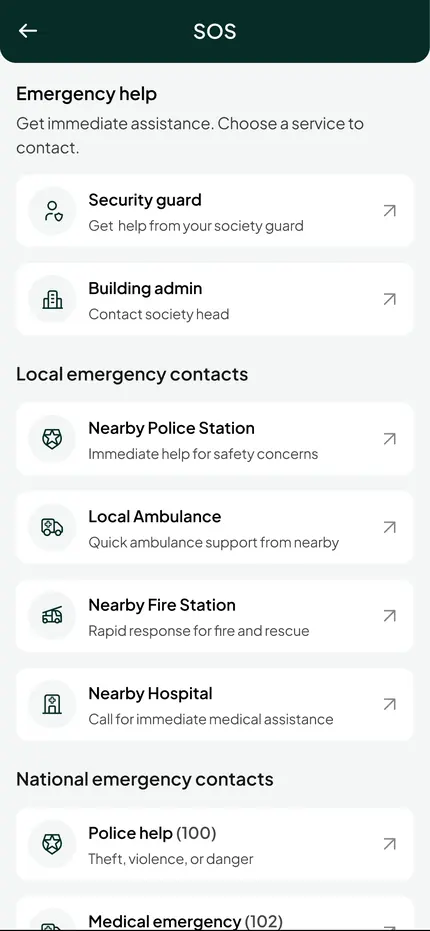
Bini did not begin with a market study. It began with the ordinary, repeating friction of running a housing society: a register at the gate that nobody could read back, a treasurer holding the ledger together in one spreadsheet, and a WhatsApp group where every decision eventually got buried.
The software that already existed was built for large developers and property firms: heavy, expensive, and assuming a full-time office to operate it. An ordinary housing society does not have that. It has four or five people with day jobs, doing this after hours because somebody has to.
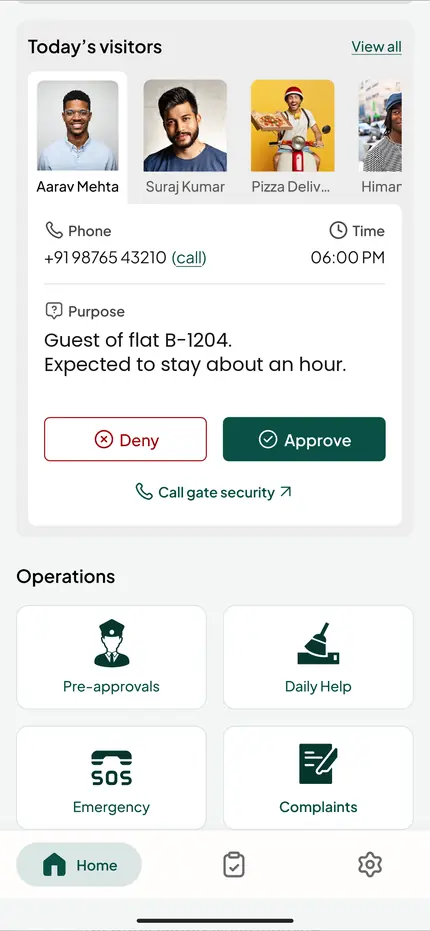
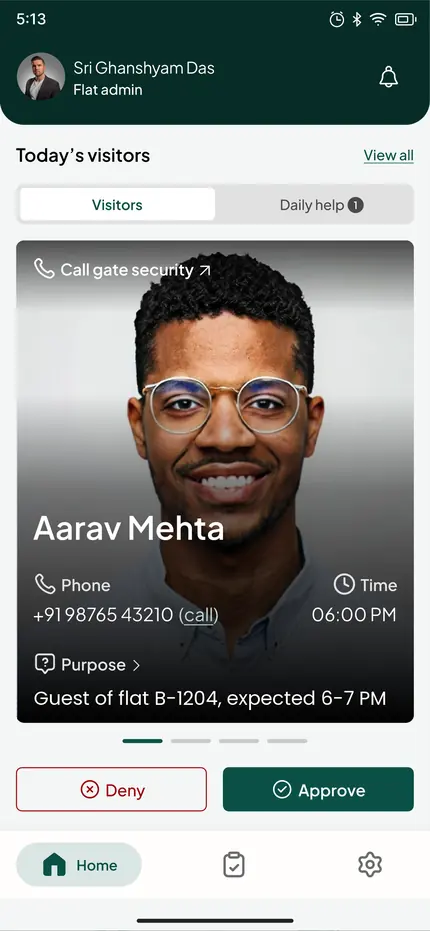
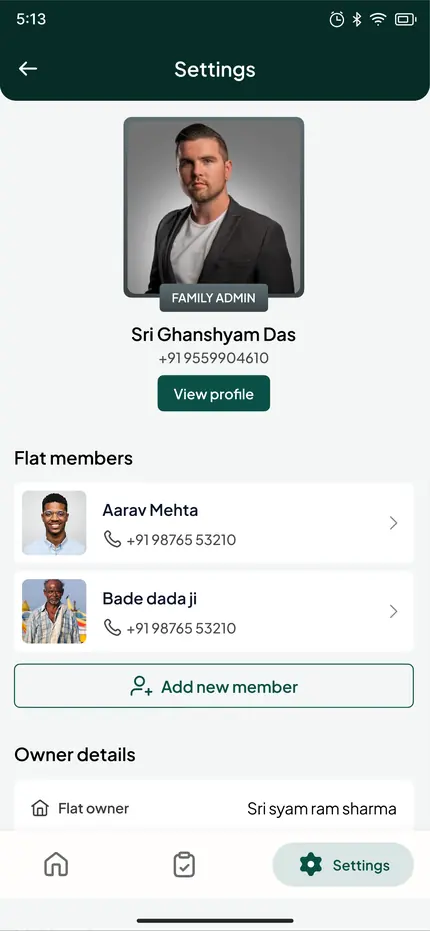
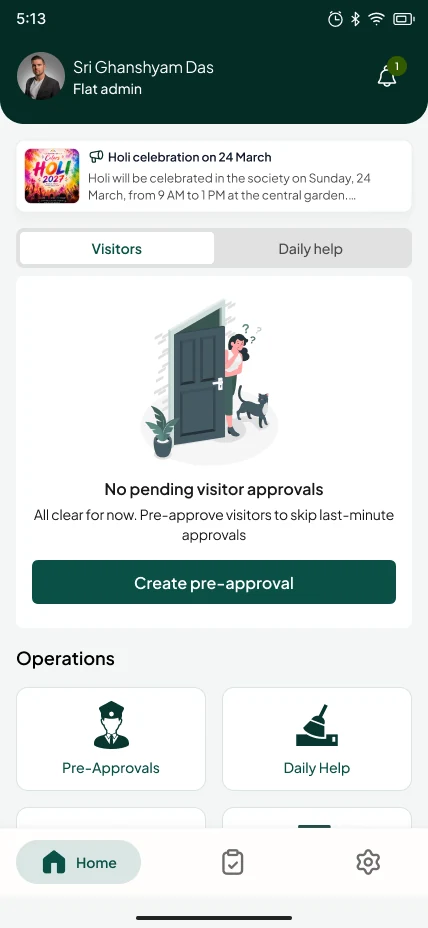
So Bini was built the other way around, for the volunteer rather than the administrator. Anything that needed explaining twice was removed. Anything a committee member could not do on a phone, standing in a corridor, was redesigned. And the two things that quietly cost societies the most, advertisements sold against their residents and data sold behind their backs, were ruled out in the contract rather than in the marketing.
It is a smaller product than an ERP on purpose. It does the paperwork of a society properly, and it stops there.
Damselfly Technologies was established in 2021. Bini took until 2024 to be worth putting in front of a committee, and it has been running in societies since. Three years is a long time to spend on something this ordinary. It is also why a guard can be taught the gate screen in forty-five minutes.
Jayesh RamsinghaniFounder, and the person who answers the phone